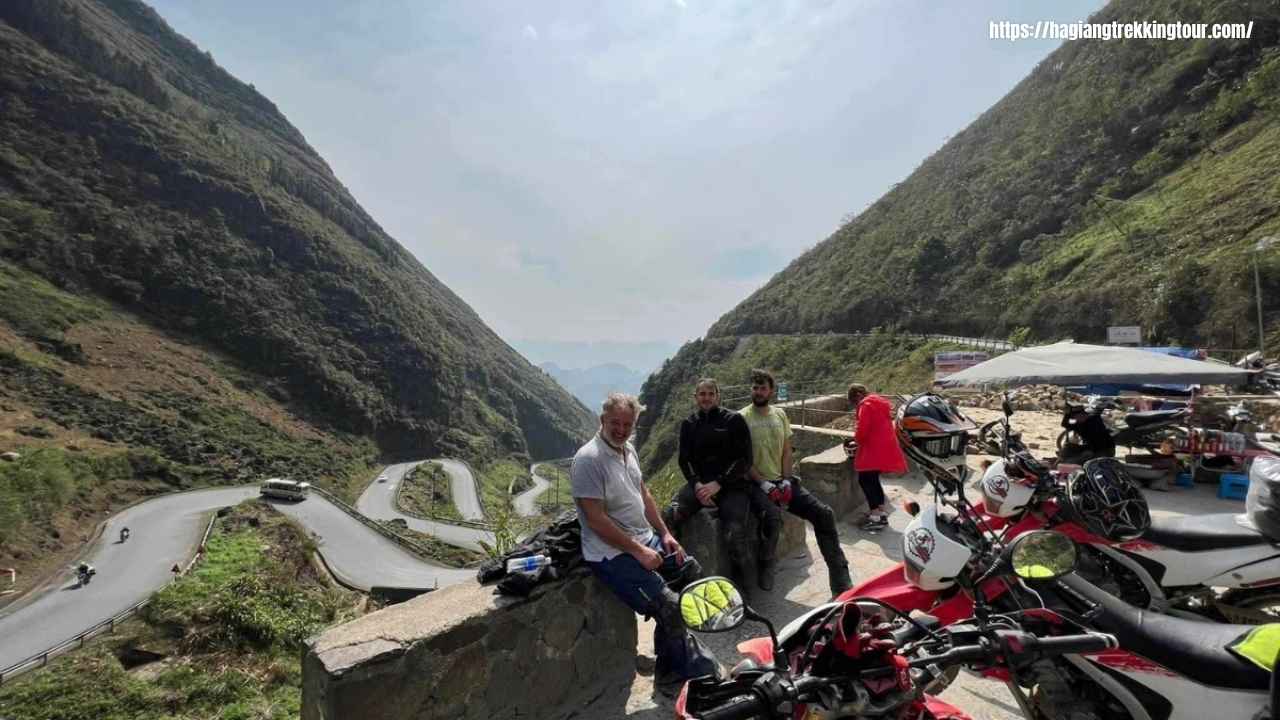
Why This Ha Giang 4-Day Tour Is Different
Most people who come to Ha Giang ride the loop. They see the same passes, eat at the same roadside stops, sleep in the same guesthouses in Dong Van. And it's beautiful — genuinely. But what they miss is the part that doesn't have a name on any tourist map.
This Ha Giang 4-day tour is built around that gap. Two days on foot through terraced valleys, bamboo forests, and Black Dao and Tay villages that standard loop tours never pass through. Then two days on the loop itself — but with a guide who knows exactly when to stop, where to look, and which viewpoints the tour buses walk straight past. This is the Ha Giang local experience that most travelers only realise they missed after they've already left.
This is a genuine Ha Giang loop and trekking hybrid — not a loop tour with a short forest walk tacked on. Days 1–2 follow mountain trails through working farmland, ancient tea gardens, and riverside bamboo forest that have never been on a group tour itinerary. Days 3–4 cover the full northern circuit: Du Gia Waterfall, Meo Vac, Ma Pi Leng Pass, Tu San Canyon, Dong Van, Yen Minh, Quan Ba Heaven Gate. Four days. Both worlds. No compromises.
The tour departs daily from Ha Giang City and returns to Ha Giang City by 17:00 on Day 4 — easy to combine with an overnight bus from Hanoi in either direction. Your guide is a Ha Giang local who has walked these trails and ridden this loop more times than he can count. That knowledge is the difference between a tour and an experience.
Is This Ha Giang Tour Right for You?
An honest look at who gets the most from this 4-day trekking and loop tour — and who might be better suited to a different program.
-
🥾
-
🛵Loop riders who want the full picture — Days 3–4 cover the iconic Ha Giang loop and trekking combo most guides won't offer. Ma Pi Leng, Tu San Canyon, Quan Ba — with time to actually stop.
-
📸Photographers & nature lovers — rice terraces mid-trek, waterfall swims, the turquoise Nho Que River from Ma Pi Leng. Every day delivers a completely different visual world.
-
👫Couples & solo travelers — small group, max 8, genuine minority homestays. The kind of trip couples still talk about five years later.
-
🌏Travelers with 4 days in Ha Giang — this itinerary is designed to make every hour count. No filler days, no repeated scenery. Just the best of both worlds.
-
🏨Luxury-only travelers — homestays are clean, warm, and authentic. But they are not boutique hotels. The magic is in the simplicity, not the thread count.
-
🌀Severe motion sensitivity — Days 3–4 involve winding mountain roads, particularly the Ma Pi Leng Pass section. Tablets help, but if you struggle badly in switchbacks, discuss options with us first.
-
🛋️Zero-activity travelers — Days 1–2 require 16 km of trekking on mountain trails. There's no vehicle shortcut. If walking is not for you, our loop-only tour is a better match.
-
📶Those who need constant connectivity — signal is minimal or absent in the trekking villages. Plan to be off-grid. Most people find it one of the best parts of the trip.
4-Day Ha Giang Itinerary: Trek & Loop Route Overview
- Drive ~3h to trailhead at Thon Tha
- Trek through rice terraces & bamboo forest
- Lunch in a Black Dao stilt house, Lung Vai
- Arrive Xa Phin — village homestay
- ~4h downhill trek to Phuong Tien valley
- Lunch with a Tay family
- Bicycle ride through Tay village roads
- Swim at Ha Thanh Waterfall
- Morning visit: Du Gia Waterfall
- Ride through Tay & Hmong villages
- Lunch in Du Gia town
- Dramatic karst plateau entry to Meo Vac
- Ma Pi Leng Pass — Tu San Canyon viewpoint
- Tham Ma Pass · Moon Surface view
- Lunch in Yen Minh
- Quan Ba Heaven Gate · Twin Mountains
- Return Ha Giang City ~17:00
Ha Giang City → Thon Tha → Lung Vai → Xa Phin · First Trek Day
Your trekking guide meets you in Ha Giang City in the morning. From there, you drive to the trailhead at Thon Tha — a quiet village on the edge of Ha Giang's trekking corridor, surrounded by rice paddies and palm groves. This is where the boots go on and the phones go into the bag.
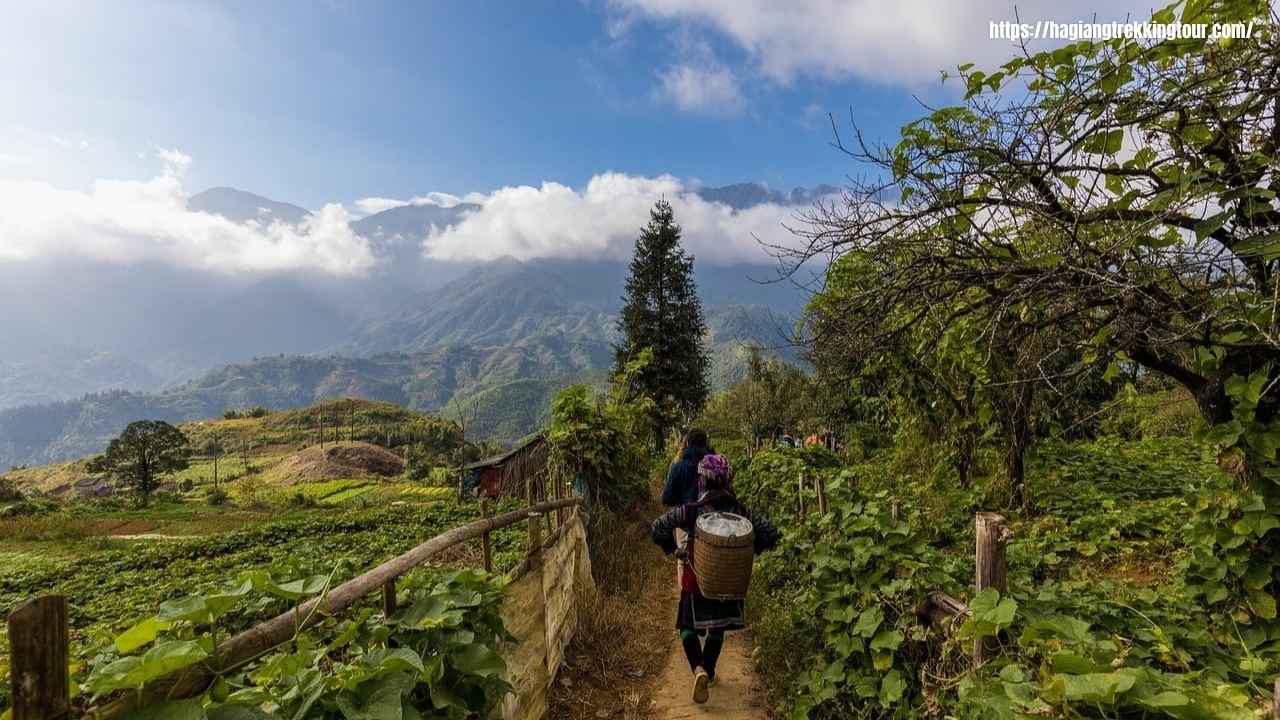
The trail opens immediately into one of the most rewarding landscapes in northern Vietnam: terraced rice fields climbing steeply up both valley walls, carved by generations of Black Dao and Nung families. Seasonal waterfalls cut through the terraces. Small mountain streams run cold enough to jolt you awake. Your guide sets a pace that gives you time to stop, look, and actually absorb it — this is not a forced march.
Around midday the trail arrives at Lung Vai, a Black Dao hamlet perched just above the valley floor. Lunch is hosted inside a traditional stilt house — a meal prepared by the family over a wood fire, using vegetables from the surrounding terraces. Expect steamed rice, fresh greens, local sautéed vegetables, and whatever is in season. Simple, generous, and surprisingly good.
The atmosphere here is unlike anything in a restaurant: smoke drifting through the house beams, the sound of the valley below, a family going about their afternoon as guests sit at their table. Take your time. There is no hurry.
The afternoon section of the trail changes character: the open terraces give way to dense bamboo forest, then a final stretch across tea-covered slopes before dropping into Xa Phin. This is a compact Black Dao village in the upper valley — small, quiet, and genuinely off the tourist map. Your homestay family here speaks little English, but hospitality needs no translation.
Dinner is cooked at the homestay. The rest of the evening is entirely uncurated: the village at dusk, fireflies if it is the right season, and the kind of silence that only exists this far from a main road.
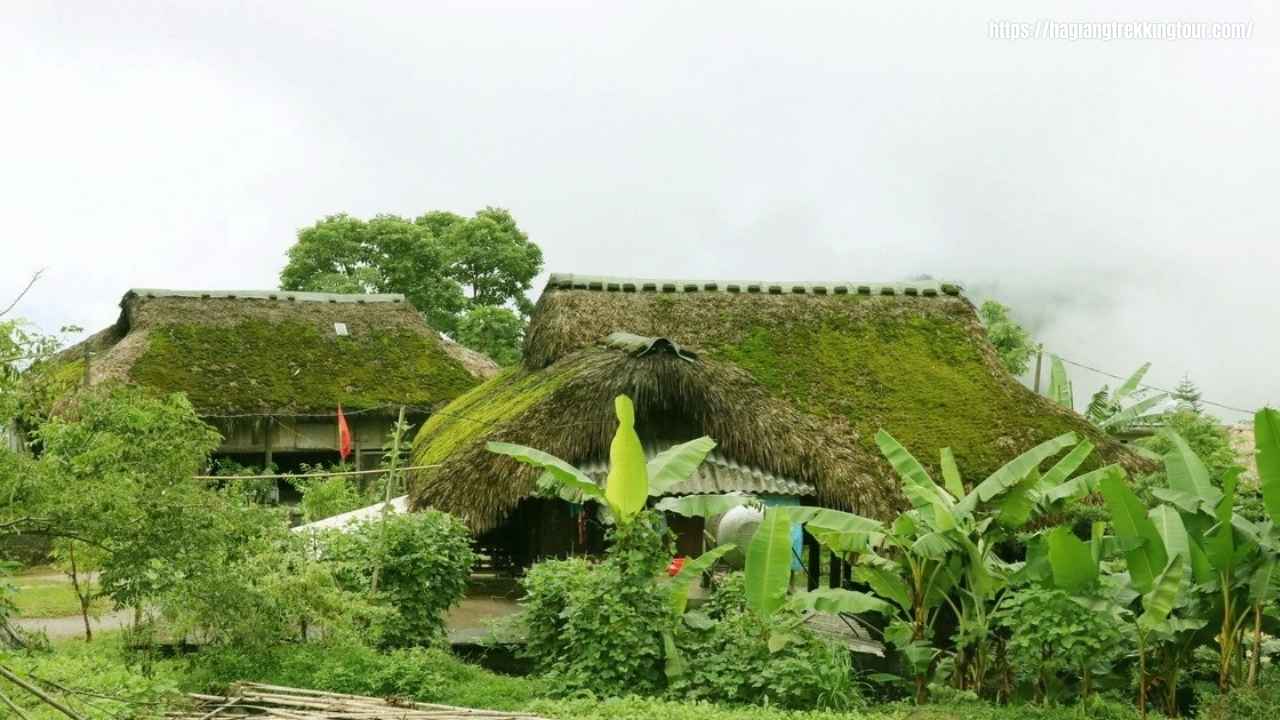
Xa Phin → Phuong Tien → Ha Thanh Waterfall → Thon Tha · Downhill Trek & Cycling Day
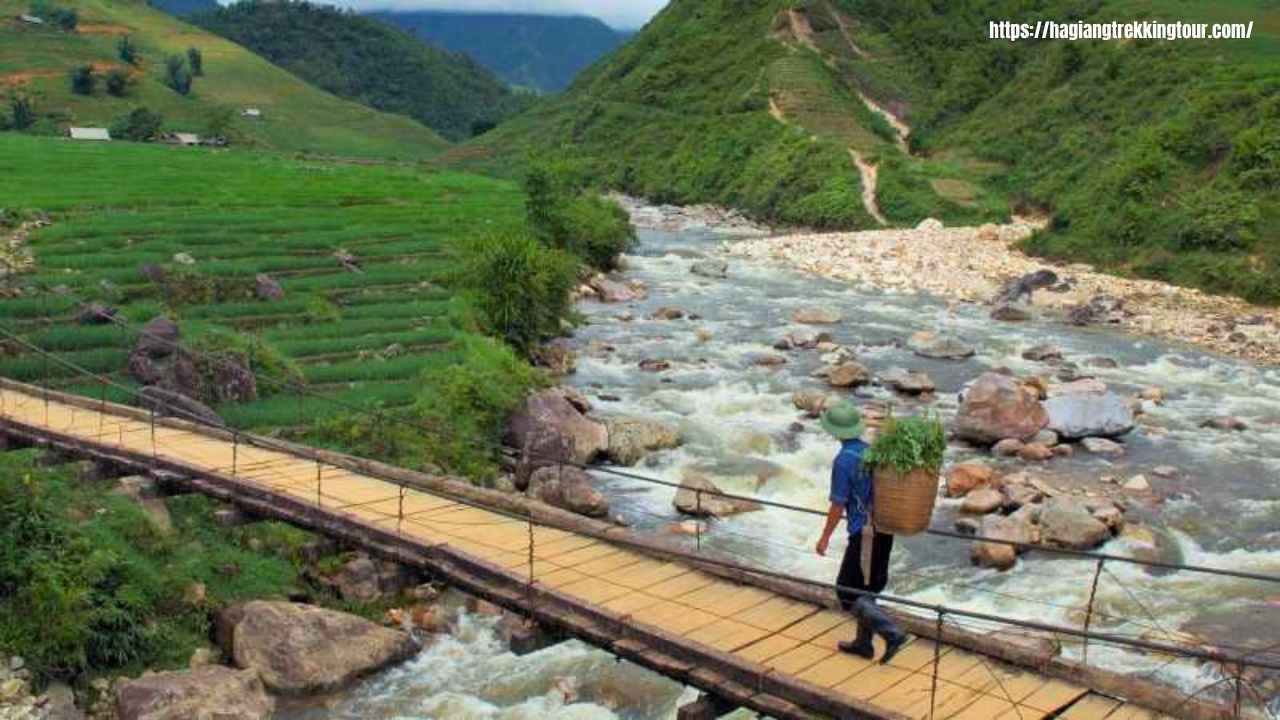
After a home-cooked breakfast with your Dao homestay family, today begins the way every trekker hopes Day 2 will go: almost entirely downhill. From Xa Phin, the trail descends steadily for around four hours toward the broad valley floor, passing through a mix of bamboo groves, open farmland, and a series of small stream crossings that keep the air cool even when the sun is high.
The lower you descend, the wider the landscape opens. Terraced hillsides soften into flat paddy fields. The sounds change — fewer birds, more water, more human activity. By late morning you reach Phuong Tien, a Tay farming community in the valley bottom that almost never sees foreign visitors on foot.
Lunch is hosted by a local Tay family in Phuong Tien — a long wooden table, family-style dishes, and conversation translated freely by your guide. The Tay are Ha Giang's lowland valley people: their food is less herb-heavy than Dao cooking, their houses are built differently, and their daily rhythm is tied to the rice calendar below rather than the mountain seasons above. It is a completely different cultural experience from last night, reached in the same morning's walk.
After lunch, boots are swapped for bicycles. Your guide provides bikes for a relaxed ride along valley roads through Tay minority villages — flat terrain, paddy fields on both sides, wooden houses with raised floors and open front porches. This is cycling at the pace of the place: unhurried, with frequent stops that are not planned.
The afternoon's headline is Ha Thanh Waterfall — a wide, powerful cascade that drops into a natural limestone pool. The water is cold and clear, fed straight from the hillside above. There are no entrance fees, no kiosks, no crowd. Just the sound of the water and room to swim. Most travelers spend longer here than expected, and that is entirely fine.
A short vehicle transfer in the late afternoon brings you to Thon Tha village — your base for Night 2 — where dinner is served in a traditional Tay stilt house. The architecture is different from Xa Phin, the food is different from Xa Phin, and the quiet is exactly the same.
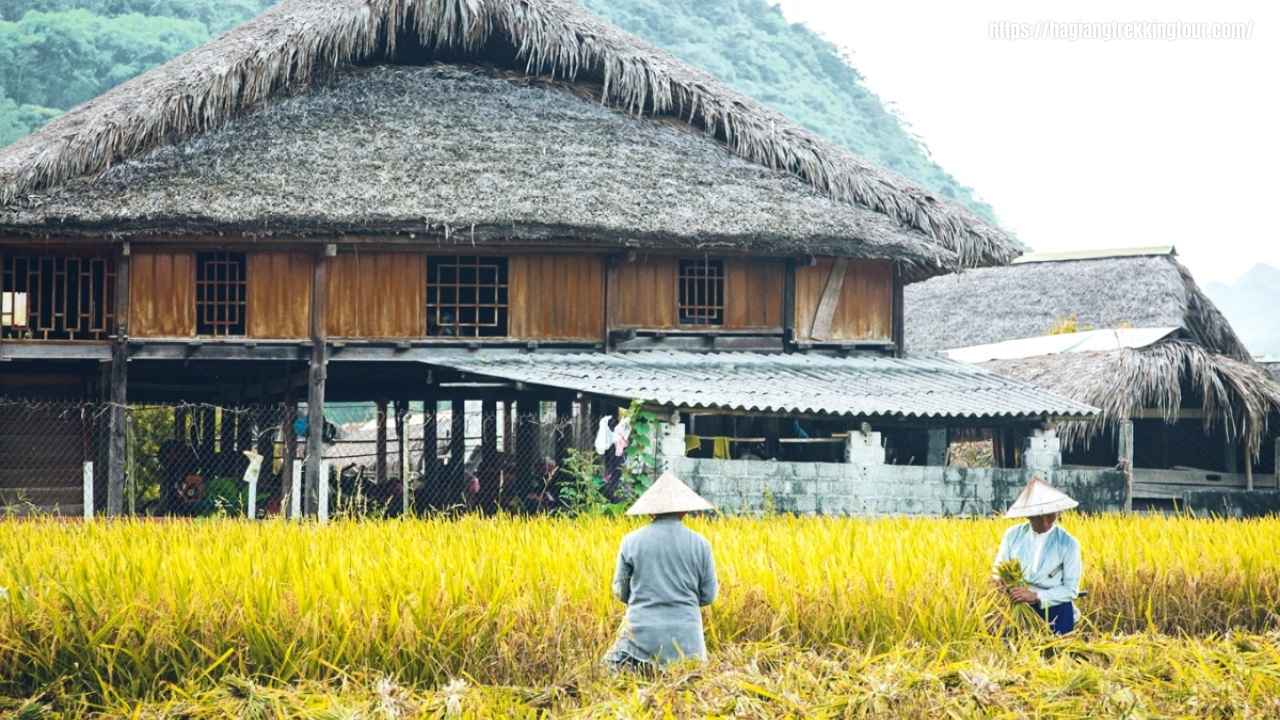
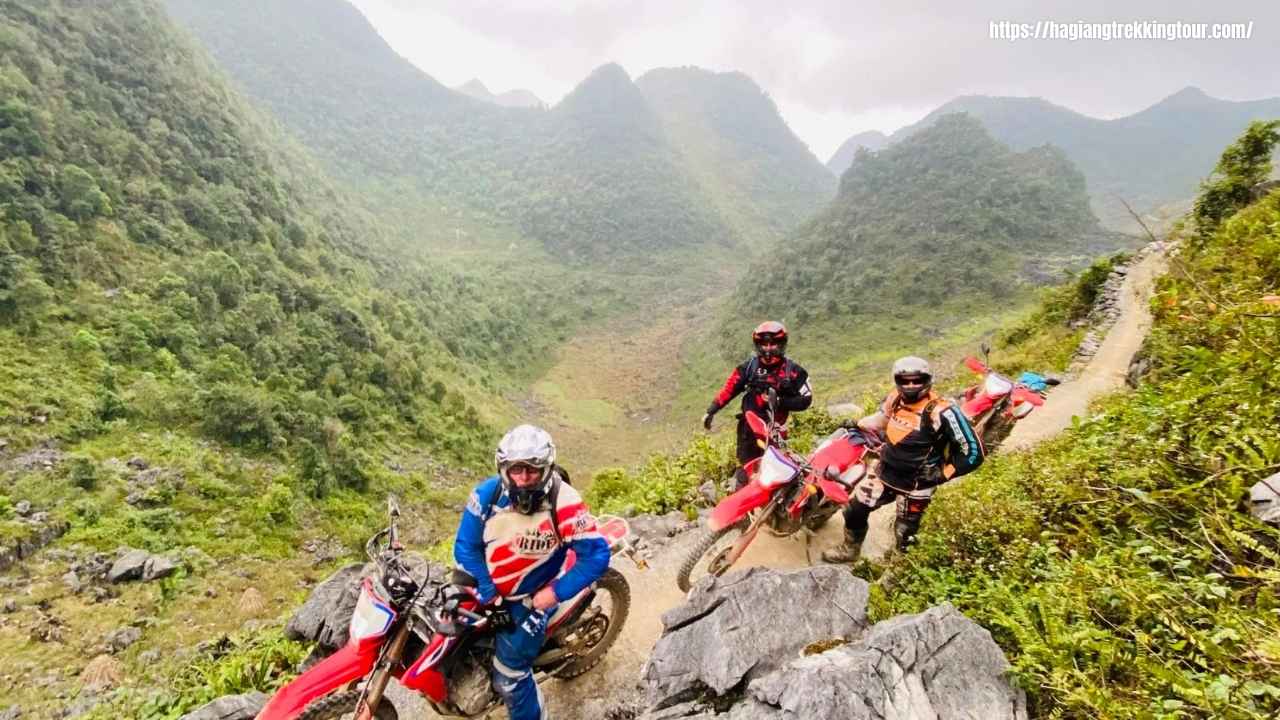
Day 3 is the moment everything changes. After two days walking through bamboo forests and sleeping in village stilt houses, you leave Thon Tha behind and swap your boots for the seat of a motorbike — or the window of a private car. The valley road opens up almost immediately, and within the first thirty minutes you understand why people talk about Ha Giang loop and trekking as two completely different worlds.
Most people who do the Ha Giang loop start here at the bottom, ride through fast, and never see what's beyond Da Vi mountains. You've already had two days off the beaten path — now you get the full picture.
The first stop is Du Gia Waterfall — a wide cascade that drops into a clear pool at the bottom of a forested gorge. It is one of the most underrated swimming spots in the entire Ha Giang circuit. The water runs cold year-round from the hillside above. Most riders who do the standard Ha Giang loop never come down this road and never find it. You do.
If the weather is warm, this is a twenty-minute stop that turns into an hour. Your guide will never rush you here. Take the swim. You won't regret it.
Lunch is in Du Gia town — a small district capital with a quiet market, a couple of local restaurants, and the kind of unhurried pace that reminds you you're still far from the tourist trail. Your guide knows where to eat. The portions are generous, the price is low, and the view from the table is better than anything on the menu.
This is a good moment to charge devices, buy snacks, and get comfortable for the afternoon's ride. The road ahead changes dramatically — you're about to enter the stone world.
After Du Gia, the landscape undergoes a geological shift that never gets less dramatic no matter how many times you ride it. The green, forested valley gives way to the Dong Van Karst Plateau Geopark — a moonscape of exposed limestone peaks, sparse vegetation, and Hmong settlements perched on cliff edges. The road curves around formations that look like they were placed there by accident.
You arrive at Meo Vac in the late afternoon. The town sits in a deep basin surrounded by karst mountains — narrow streets, market stalls closing for the day, the smell of wood smoke from kitchen fires. Check into the guesthouse, take a long shower, and eat dinner with your guide. Tomorrow is the best day of the tour.
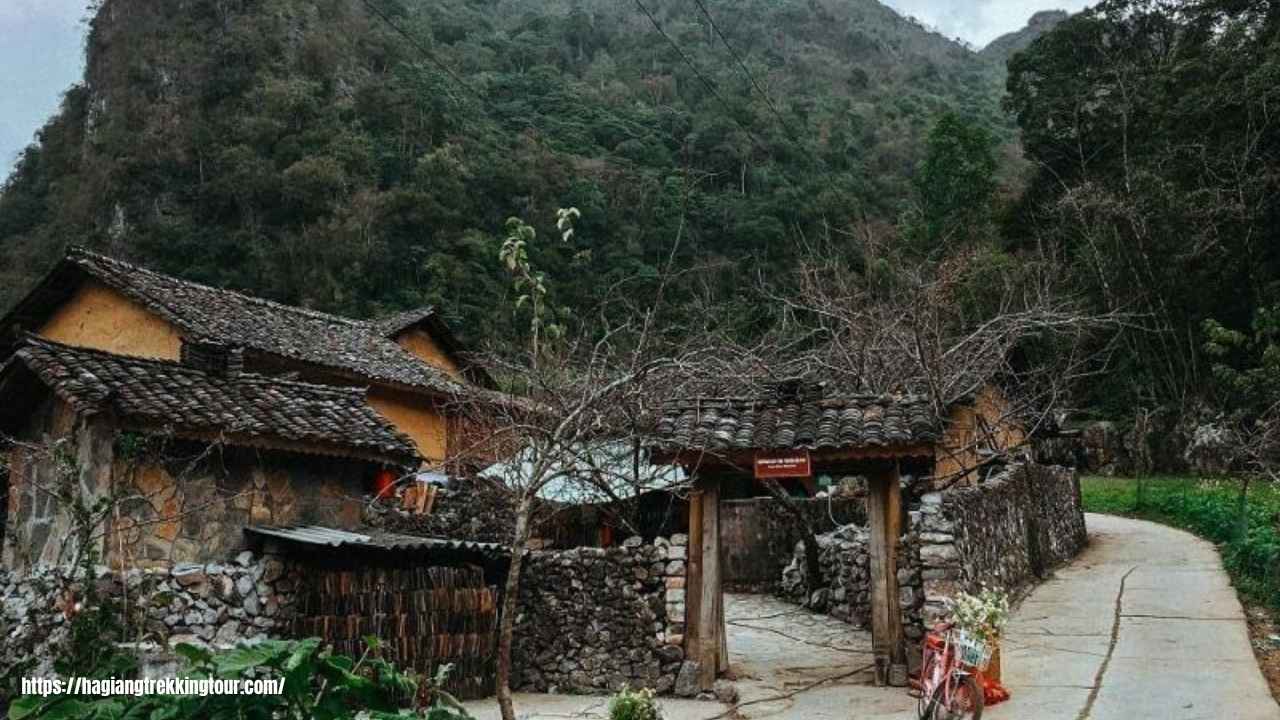
Meo Vac → Ma Pi Leng Pass → Dong Van → Yen Minh → Quan Ba → Ha Giang · The Legendary Loop (~155 km)
Wake up early. Today is the day that makes people come back to Ha Giang a second time — and a third. Breakfast in Meo Vac, then onto the road before the morning mist fully lifts from the basin. The town feels different at this hour: market vendors setting up, the smell of pho from open-front kitchens, roosters doing their job. Take it in. You won't see Meo Vac like this on a standard tour.
The road west out of Meo Vac climbs immediately into the most dramatic section of the entire Ha Giang 4 day tour — the legendary Ma Pi Leng Pass. This is not a tourist attraction bolted onto a road — it is the road itself. Twenty kilometres carved through sheer limestone cliffs by 1,300 volunteers over eleven years without a single piece of motorised equipment. In H'mong language, Ma Pi Leng means horse's chin: the near-vertical cliff face the road clings to.
Your first major stop is the Tu San Canyon viewpoint — a designated overlook above the gorge where the Nho Que River runs electric turquoise two hundred meters below. The colour is real. No filter. It comes from the limestone mineral content of the karst. On clear mornings, the canyon walls catch the early light in a way that makes everyone stop talking at the same time.
Continuing west from Ma Pi Leng, the road crests Tham Ma Pass — a quieter, less-celebrated viewpoint that most riders skip in their rush toward Dong Van. The view from Tham Ma is different: instead of the vertical gorge below, you look out across a broad sweep of the karst plateau, layer after layer of limestone formations receding toward the horizon. It looks like the end of the world in the best possible sense.
Just past Tham Ma, the road passes through what locals call the Moon Surface — a section of exposed limestone pavement scraped clean by centuries of wind and rain. No soil. No trees. Just grey rock and sky. It is simultaneously eerie and unforgettable, and it lasts only about twenty minutes of riding before the road descends back into green valley territory around Dong Van.
The route passes through Dong Van — a UNESCO-recognised geopark town with a preserved Old Quarter and a Sunday market worth stopping for if your dates align — before continuing south through the highlands toward Yen Minh, where lunch is served.
Yen Minh is a district town most travelers drive through without stopping. That's their loss. The local restaurants here serve highland food that is noticeably different from the Tay cooking of the valley days — heavier, more reliant on dried and smoked ingredients, the kind of meal that makes sense in a cold highland climate. A proper stop, not a rushed petrol-station break.
After Yen Minh, the road descends toward one of Ha Giang's most iconic viewpoints: Quan Ba Heaven Gate, a mountain pass that frames the valley below in a natural archway of limestone. The view from the top takes in the Quan Ba Twin Mountains — two perfectly round karst peaks rising from the valley floor that have become one of the most photographed images in all of northern Vietnam.
The legend says a fairy fell in love with the human world and left two gifts behind. The geology says they are isolated remnant karst towers. Either way, they are extraordinary. Your guide will point out the best angle for photographs — not the official viewpoint platform, but a spot slightly to the left that the tour buses never use.
The final stretch south from Quan Ba to Ha Giang City takes about ninety minutes on winding highland road. You arrive around 17:00. The tour concludes here.
Your guide will drop you at your accommodation and assist with any onward arrangements — luggage storage is available if you need it before catching an evening bus or waiting for a later transfer. Most guests take the overnight bus back to Hanoi the same evening. A few decide to add a night in Ha Giang and book something else. Either way, the decision is easier once you've showered.

Programs and exact schedules may adjust for weather, road conditions, or seasonal factors. Optional activities (Nho Que boat trip) are weather and fitness dependent. Your guide will communicate any changes the evening before each day.
What's Included & Excluded
✅ Included
- ✓FREE pre-tour night in Ha Giang City (Night 0)
- ✓Motorbike, Easyrider, or private car (Days 3–4, as selected)
- ✓Fuel & helmets for all riding days
- ✓English-speaking local guide throughout
- ✓Dedicated trekking guide + porter (Days 1–2, if needed)
- ✓All meals: breakfast, lunch & dinner every day
- ✓3 nights accommodation — 2 authentic homestays + 1 guesthouse
- ✓Bicycle for Day 2 village cycling
- ✓All entrance fees & sightseeing tickets
- ✓Drinking water throughout the tour
- ✓Boat ticket on Nho Que River (if added)
❌ Not Included
- ✗Personal expenses & shopping
- ✗Alcoholic drinks & soft drinks
- ✗Travel insurance (strongly recommended)
- ✗Tips for guides or drivers (optional, appreciated)
- ✗Hanoi → Ha Giang transport (we can help arrange)
Practical Information
| Departs from | Ha Giang City · exact pick-up time confirmed by WhatsApp the evening before |
| Returns to | Ha Giang City, Day 4 approx. 17:00 — most guests take the overnight bus back to Hanoi the same evening |
| Day 1 trekking | ~16 km — Thon Tha → Lung Vai → Xa Phin · Level 6/10 Uphill sections through terraced farmland and bamboo forest — trekking shoes essential |
| Day 2 trekking | ~12 km — Xa Phin → Phuong Tien → Ha Thanh · Level 4/10 Mostly downhill to valley — easier on the legs, ends with a waterfall swim |
| Group size | Small group — max 8 travelers · private tour available on request |
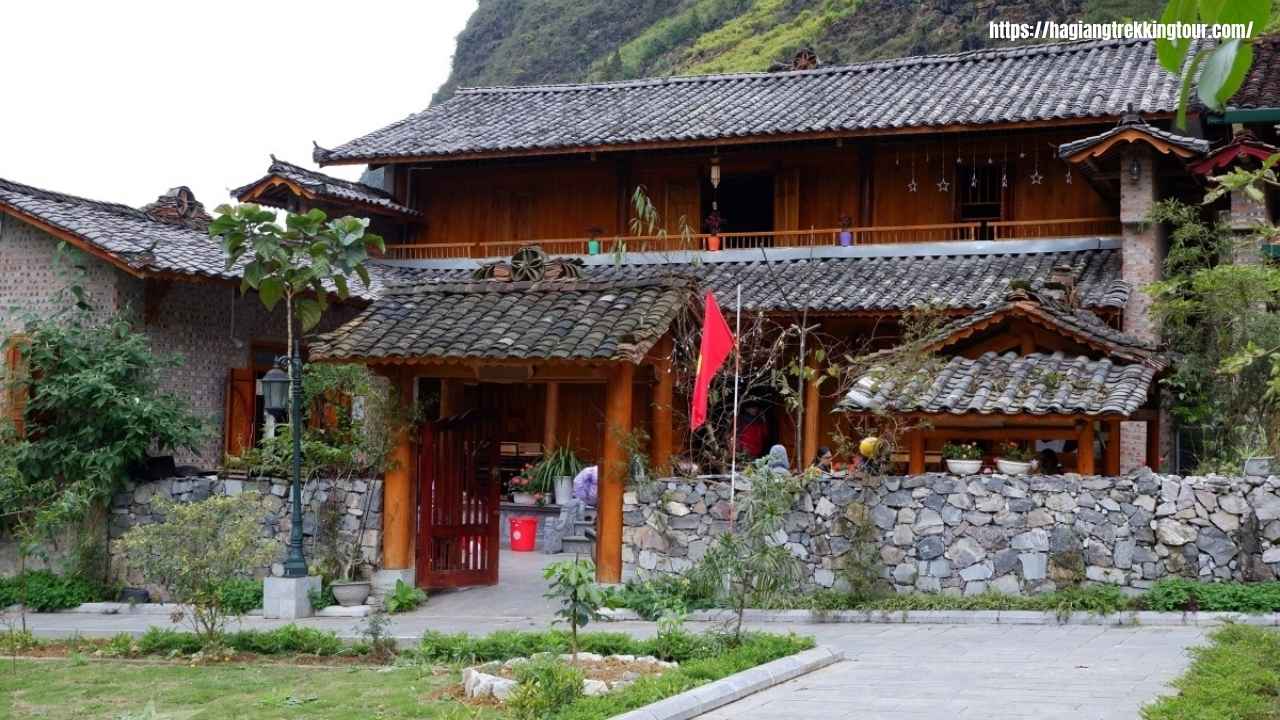
| Homestays | Night 1: Black Dao stilt house, Xa Phin · Night 2: Tay stilt house, Thon Tha · Night 3: guesthouse, Meo Vac · all with mosquito nets and basic amenities |
| Best seasons | May–Jun (lush green terraces) · Sep–Nov (golden harvest, clearest skies on the loop) · Year-round operation |
| What to pack | Sturdy trekking shoes, light layers, rain jacket, swimwear, sunscreen, cash in Vietnamese Dong |
| Cancellation | Free cancellation 72h+ before departure · 50% refund 48–72h · Non-refundable <48h |
Frequently Asked Questions
What Travelers Are Saying
Travelers from:
"Our guide led us through 13km on Day 1 and 10km on Day 2 — thanks to his narration, we never felt the distance. He had a remarkable ability to highlight things in the landscape we would have walked straight past. His photography skills were a bonus — I have photos from this trip that look professional."
"The homestay experience was exceptional. Our guide and the local family made our time in Sapa genuinely unforgettable. Their warmth and knowledge enriched every moment. This was the best decision we made for our entire Vietnam trip."
"First time trekking in Southeast Asia. The routes were manageable — we crossed villages and countryside with views that photographs simply don't prepare you for. The homestay was cozy and real. Nothing was staged for tourists."
"Sin Chai Village was the unexpected highlight — barely any tourists, just us and the mountain. My partner and I agreed it was the most beautiful place we visited in all of Vietnam. The guide's knowledge of local farming and Hmong customs made every step feel educational."